

F&I Compliance for Automotive Dealerships
F&I operations represent one of the highest areas of compliance risk within a dealership. From deal structuring and lender requirements to disclosures and documentation, even small errors can create significant legal exposure. Ignite Dealer Compliance Group provides structured F&I compliance services designed to reduce risk and improve operational consistency.
Led by automotive compliance attorney Steve Levine, our approach begins with compliance audits and risk assessments and extends into documentation, training, and long-term process alignment.
Why F&I Compliance Matters
F&I departments operate at the intersection of lending, consumer protection, and regulatory oversight. Errors in disclosures, deal structure, or documentation can result in lender issues, customer disputes, and regulatory enforcement.
Maintaining compliance requires a consistent, well-defined process supported by accurate documentation and trained personnel. Without that structure, even experienced teams can create risk.
Key Areas of F&I Compliance

Our Approach to F&I Compliance
We take a structured approach to F&I compliance that integrates directly into your dealership operations.
Common F&I Compliance Risks
| Area | Common Issue | Potential Risk |
|---|---|---|
| Deal Structure | Inconsistent terms | Lender rejection |
| Disclosures | Incomplete information | Legal exposure |
| Documentation | Errors in contracts | Customer disputes |
| Process | Lack of consistency | Compliance violations |
Strengthen Your F&I Compliance Process
Reduce risk, improve consistency, and ensure your F&I operations meet regulatory expectations.
Benefits of Structured F&I Compliance
A structured F&I compliance program improves deal accuracy, reduces lender issues, and minimizes legal exposure. It creates consistency across transactions and ensures that your dealership operates within regulatory guidelines.
When integrated into custom compliance programs and supported by accountability groups, F&I compliance becomes part of a sustainable long-term strategy.
Attorney Led F&I Compliance
All F&I compliance services are guided by Steve Levine, ensuring that your dealership operates with a clear understanding of legal requirements and enforcement trends.
Frequently Asked Questions
What is F&I compliance?
It refers to the processes and documentation required to ensure dealership financing operations meet legal standards.
Why is F&I high risk?
Because it involves lending, disclosures, and financial agreements regulated by multiple agencies.
How can dealerships reduce risk?
Through audits, document review, training, and structured compliance systems.
About the Author
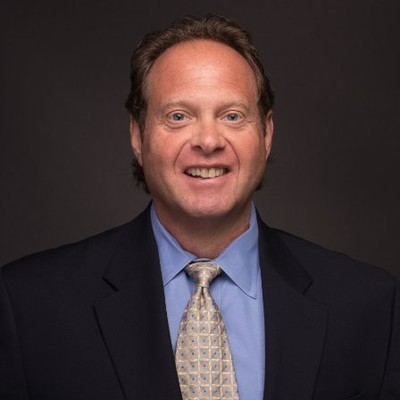
Steve Levine is an automotive compliance attorney and founder of Ignite Dealer Compliance Group, specializing in F&I operations, dealership compliance systems, and regulatory risk management.
View Full Profile